The sky’s the limit for users of theSkyNet

Thanks to Pete Wheeler, UWA for sending in this article:
Thanks to a new initiative called theSkyNet, you don’t need a supercomputer to help collect data for the next generation of radio telescopes.

This ambitious citizen science project uses a global network of privately owned computers to process astronomical data arriving from galaxies, stars and other distant objects located across the universe.

WA’s Science and Innovation Minister, John Day, launched theSkyNet in September 2011.

The project soon attracted almost 20,000 hits to theSkyNet.org website, and nearly 3,000 members in the first day. A few weeks later, the website surpassed 100,000 hits and 5,000 members.

Members sign up and donate their spare computing power to theSkyNet, an activity which is not only rewarding, it’s also fun. Members receive “credits” for processing data and donating time on their computer, which earns them trophies they can share with their networks through Facebook. Users participate in the project as individuals but can also form or join alliances to help process data as a group.

There are also some very real-world rewards on offer, with the most attractive being the opportunity to visit the Murchison Radio-astronomy Observatory in the Mid-West of Western Australia. This remote and radio-quiet site is home to several next generation radio telescopes and is earmarked as the potential site for the proposed Square Kilometre Array.

With support from the WA State Government, theSkyNet is an initiative of the International Centre for Radio Astronomy Research (ICRAR), a joint venture of Curtin University and The University of Western Australia.

According to ICRAR’s Outreach and Education Manager, Pete Wheeler, the project aims to involve people in the discovery process while also raising awareness of radio astronomy and providing a real resource that astronomers can use to advance our understanding of the universe.

“This is a very exciting project for us as it’s a unique opportunity to bring our research and public outreach activities together and get the public involved in science,” he said.

“We were hopeful that the name of the project would generate interest, but the level of interest and uptake we experienced so soon after launch was beyond our wildest expectations.”

So far, theSkyNet has been using data collected by the Parkes radio telescope in New South Wales to refine the system and demonstrate that the results produced by theSkyNet are scientifically useful and accurate.

Next, theSkyNet will use a reprocessed version of this data to create a new catalogue of radio galaxies before moving on to larger data sets in preparation for the enormous volumes of information that will flow once telescopes such as the CSIRO’s Australian SKA Pathfinder come online in the next couple of years.

ICRAR Director, Professor Peter Quinn, said: “Radio astronomy is a data intensive activity and as we design, develop and switch on the next generation of radio telescopes, the supercomputing resources processing this deluge of data will be in increasingly high demand.”

At any one time, around 4,000 machines around the world are online and contributing to theSkyNet. On average, the network is performing one million processing tasks per day, placing theSkyNet on par with a supercomputer with between 15 and 20 TFlops of computing power. The cost to build a single supercomputer with this sort of capacity is currently around $1.5 million.

Rather than the cost and years of planning needed to build and run such a machine, theSkyNet runs with only minimal cost and has appeared virtually overnight. Using the power of the Internet to connect people to the excitement of scientific discovery makes cost effective, efficient and environmentally sensible use of readily available computing resources that might otherwise be wasted.

This type of community computing is especially useful when the time taken to process the data is not an issue. Rather than using valuable supercomputing time in facilities such as the iVEC Pawsey Centre in Perth, data that can be processed in “slow time” can be off-loaded to a distributed network like theSkyNet.

“The key to theSkyNet is having lots of computers connected, with each contributing only a little, but the sum of those computers can achieve a lot,” Professor Quinn said.

For further information and to sign up, visit theSkyNet website at www.theSkyNet.org

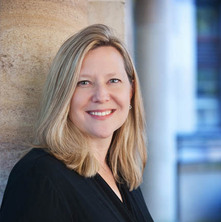
Past President and Life Member Profile: Alison Leigh

From Alison Leigh:

I didn’t grow up dreaming that one day I would be …. the Editorial Director of the World Congress of Science Producers. No such thing existed. Now it does and like the best things in life – it evolved.

I emigrated to Sydney from the UK in 1988 – bicentennial year; fully expecting my on-screen career as a BBC TV and radio reporter /presenter to continue to flourish here. Wrong. I was “too old” and “too English”. Yikes! What to do? Try my hand at producing? My current affairs credentials landed me the job of Producer, Media Watch, with the task of getting series one to air. Next thing I know after that baptism of fire, I’m being courted by the Executive Producer of “Quantum”- to be the Series Producer – i.e. day to day manager of that show. Saying yes to that job changed my life – and my focus.

For several years I was Series Producer and then Executive Producer of the ABC TV Science Unit. This gave me the privilege of being closely involved in the development, production and commissioning of dozens of science TV programs in addition to Quantum:  Hot Chips, What’s your poison?, The Future Eaters to name a few. I was also closely involved in the development of major initiatives that have enhanced the celebration and understanding of science in Australia such as National Science Week and of course, our very own ASC – I was a founding member. We were a small group then and now look how far we’ve come.

As Executive Producer of the ABC TV Science Unit, I used to represent the ABC at a small somewhat chaotic annual get together of science producers and broadcasters hosted each year by one or other public broadcaster somewhere in the world.

My great good fortune is that just as I left the ABC in 1998 to go freelance, the science broadcasters decided that their annual get together, or congress as it was now called,  should become a professional conference. In 1999, they asked me to be the programmer of the event, the role I’ve held ever since.

The World Congress has grown into a unique forum of presentations and discussions, where television producers and executives from all over the world come back year after year to catch up with world trends in science and factual programming, to talk passionately about program-making, and to be inspired. The convivial and informal atmosphere creates lasting friendships which lead to binding business relationships and co-production partnerships, and the all important deals to be made down the track.

It’s not a full time job:  in addition to my Congress commitments, I freelance as a science and health writer when the project interests me enough. Everything from scripts for TV series and documentaries to health articles for magazines  and most recently I co-authored the book “Eight steps to happiness” to accompany the ABC TV series “Making Australia Happy”.

But it is my dream job. Fancy being paid to watch science films and science television, to keep abreast of innovative and exciting trends in the industry, to keep in touch with some of the smartest most creative people on the planet and even to travel to exotic places to meet them all face to face. Can’t be bad. Yet if it hadn’t been for some racist and ageist attitudes way back when, it might never have happened!

ASC corporate members – meeting with Scitech

Interest is growing for organisations to become corporate members of the ASC. While I was in Perth for the 2011 ASC AGM I took the opportunity to meet with the management of one of our most recent new corporate members, Scitech.

Scitech is Perth’s and WA’s state-wide active and progressive science centre. Alan Brien, the director of Scitech, led the discussion which ranged over the recent history of Scitech and its key activities in science communication.

Some of the main points included that Scitech is the lead state institution for overseeing Inspiring Australia activities in WA. Alan’s team gave an update on developments of ScienceNetworkWA, http://sciencewa.net.au/, its online connection to science activity in the state.

We explored a few ways that Scitech and the ASC could work more closely together, starting off with the National Conference. I look forward to seeing some of the ideas being realised soon.

Jesse Shore
National President

Life Member Profile: Barbara Hardy AO

Barbara Hardy has been working in the environment field in a voluntary capacity since the early 1970s.   During this time she spent five years at the Flinders University of South Australia studying the Earth Sciences (1974-79), following a Science Degree at The University of Adelaide in 1947 (majoring in Chemistry).

She has been a Commissioner of the Australian Heritage Commission, President of the National Parks Foundation of South Australia (now the Nature Foundation SA), Founding President of the Investigator Science and Technology Centre, and Chairman of the South Australian Landcare Committee amongst a number of other roles.

Barbara Hardy was appointed an Officer of the General Division of the Order of Australia (AO) in 1987, an Honorary Doctorate of the Flinders University in 1993, as well as an Advance Australia Award 1991, SA Great Award 1992, Institution of Engineers Medal 1992, ABC Eureka Award for the Advancement of Science 1994, and was named South Australian Citizen of the Year in 1996.  She is now a Companion of the Institution of Engineers Australia, and a Fellow of the Australian Institute of Energy where she is a member of the Hydrogen Division.

In October 2001 she was appointed as the Member from Australia in the Asia-Pacific Forum for Environment and Development (APFED), a major international project initiated and funded by the Japanese Ministry for Environment.   APFED “aims to propose a model of equitable and sustainable development for Asia and the Pacific Region”.  Barbara has now stood down as the APFED Member from Australia, as of July 2006, and her place was taken by Greg Bourne, CEO of WWF Australia.

In August 2009 the University of Adelaide presented Barbara with a Distinguished Alumni Award “in recognition of her lifelong commitment, and significant contribution to the advancement of Science Education, Science Awareness, and Environmental Conservation”.

In November 2009. The University of South Australia established the Barbara Hardy Centre for Sustainable Urban Environments.   This organization later became an Institute.

In April 2010 the University of Adelaide admitted Barbara to the Degree of Doctor of the University (honoris causa).

Barbara Hardy’s principal interests are in ecologically sustainable development, biodiversity conservation, environmental valuation, renewable energy production and use, and in business and industrial matters especially as they affect the environment within which we all live.

ASC Corporate Members

The ASC now has five corporate members which is an increase on last year. I welcome the Australian Nuclear Science and Technology Organisation (ANSTO), the Powerhouse Museum (NSW), Scitech (WA), the CSIRO Energy Group, and one other CSIRO group of communicators.

Each corporate member nominates 10 people as part of their membership group and designates one of these people as their voting delegate.

I will encourage our corporate members to talk about their particular science communication challenges. Grappling to explain a challenge may help to clarify it, and sharing it with the membership may provide useful feedback and insights into corporate science communication.

The corporate members bring new members to the ASC, which in turn offers value to all concerned. It’s great to have them on board and I look forward to hearing about their collective corporate thoughts.

Jesse Shore
National President

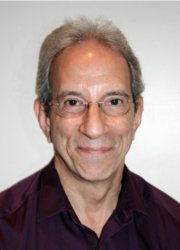
Past President and Life Member Profile: Toss Gascoigne

Toss Gascoigne has been part of ASC since it began in 1994.

He helped convene the historic first meeting at the National Press Club in February that year.  The leading lights in science communication met to discuss the formation of a new national association to provide a forum for science communicators.

Alison Leigh, the executive Producer of Quantum chaired the meeting, and the biggest debate was over membership.  Should membership be limited to science writers and journalists, or to anyone with an interest in the area and willing to pay the membership fee?

The latter view prevailed.  Julian Cribb was elected chair of a small committee to turn an idea into reality, and within a few months 375 people had signed on as Foundation Members at a cost of $25.  This gave the committee the impetus to draw up a draft constitution, put it to an inaugural general meeting in the course of the 1994 ANZAAS Conference in Geelong, and see the election of the first national executive.

The meeting approved, the constitution was endorsed, and Julian was elected President.  Toss became secretary.

That began a continuous ten year period on the ASC Executive, culminating in Toss being elected President in 2003-04.  It was a time of vigorous debates, teething problems and drama: the time when the part-time secretariat absconded with all ASC funds (they were paid back the next week, a brown paper bag of one thousand $10 notes).  Toss was elected a Life Member at the AGM in 2004.

Over this period he had worked for CSIRO, both on the Black Mountain site in the Pye Laboratory and in the national headquarters in the media unit.  He took over the position of scientific editor from Will Steffen, of climate change fame.

In 1995 he was invited to take up the position of Executive Director of FASTS, a struggling science lobby group founded in 1985 on the back of Barry Jones’ judgment of scientists.  They’re wimps, Barry declared, and if they don’t develop some backbone, scientists will never get a decent budgetary allocation.

FASTS pulled back from the brink, achieved stability, and later blossomed when “Science meets Parliament” was adopted in 1999.  Toss organised this event, and brought 160 scientists into Canberra for one-on-one meetings with members of Federal Parliament.  The event was a political and financial success, and was adopted as an annual event.  It won a Eureka Prize and an assured future for FASTS.

In 2004 Toss moved on.  He was instrumental in the establishment of a similar lobby group for the humanities, arts and social sciences (CHASS), and held the position as inaugural Executive Director for nearly five years.

There were other strands in his work as well: with Jenni Metcalfe he conceived and organised training workshops in media and presentation skills for scientists, and has run about 800 of these across Australia.  That’s about 8000 scientists with a new appreciation of what’s required to communicate.

Toss has also been involved in the international science communication scene, as a member of the scientific committee of the PCST Network (Public Communication of Science and Technology) since 1996.  He has encouraged many Australians to attend the biennial conferences (next one in Florence in April 2012), and was elected inaugural President in 2006.

Now he has stepped down from a fulltime job, and works on a consultancy basis with CRCs, government departments and academic groups on a variety of projects: reviews, events, strategic planning, writing articles and scripts.  There’s been a growing demand from international groups for the workshops he and Jenni Metcalfe devised, and in the next few months they will be running workshops in the Philippines, Thailand and New Caledonia.

Two books are in the pipeline.  Toss is editing a book on science communication in the countries of the Asia-Pacific Rim, and co-writing a chapter on the emergence of research on science communication in Australia, for an international review to be published by Springer.

It all began with CSIRO and ASC, nearly 20 years ago; and Toss is very grateful for the friends and the partnerships that ASC has provided.

(This is another new section we are trialing for SCOPE. It aims to put a spotlight on the people who have historically contributed to what ASC is today. We want to celebrate service to the organisation and introduce new members to these key people.)

ASC National Conference 2012 – update

The conference will be at Sydney Masonic Centre from 27-29 February 2012. Here’s a quick overview on progress so far:

  • Opening keynote: Professor Ian Chubb, Australia’s Chief Scientist will open the conference and be the first plenary speaker.
  • Hail to the Chiefs: Several state Chief Scientists have accepted invitations to speak at the conference. We anticipate they will feature in a plenary and perhaps parallel sessions.
  • Nobel presence: In a special video interview made for the conference, Australia’s 2011 Nobel Prize winner for Physics, Professor Brian Schmidt, will talk about the role of science communication in his work both before and after being awarded the Nobel. Rod Lamberts and Sue Stocklmayer will be asking him the hard questions. This special session will include a broad discussion of the role of science communication for science prize winners. Brian will be speaking in Washington during our conference and was sorry that he couldn’t be in two places at once.
  • Program progress: The program committee is digesting the submissions from the recent call for session producers and their proposals.
  • Pre-conference kick-start: There have been discussions with key people about the pre-conference event. If all goes well it will be fun and thought-provoking, and be a great way to lead into the conference proper.
  • Research stream: Rod Lamberts has nine reviewers lined up to scrutinise submitted research papers. Some of them may help with a subsequent monograph of a selection of edited papers to be produced after the conference is over.
  • Website: The conference website has gone live. Have a look at http://2012conf.asc.asn.au/.
  • Lots of infrastructure is being set in place and there are a few hurdles to get over. Online registrations will be activated any day now.

Jesse Shore
National President

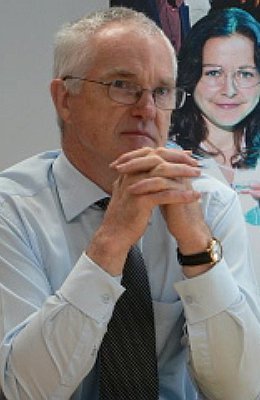
Member Profile: Dr Maia Sauren

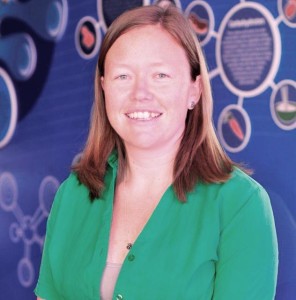
Dr Maia Sauren

Victorian National Representative

As a stubborn six-year-old, Maia Sauren heard about the scariness of bees (‘your whole hand gets huge! and then they DIE!’), so she decided to find out for herself. She resolutely stalked a poor, helpless creature and poked it until it duly gave its life for science. As an adult, Maia is a little more gentle with her experimental subjects.

A few years ago, Maia heard about this amazing job description called ‘know cool things about science and find ways to tell people how incredible they are’, so she joined the ASC list and is the current Victorian National Representative.

Just last week, Maia became the rather awesome-sounding Dr. Sauren, Electrical Engineer. She’s not quite sure what to do with all her freedom now the Ph.D. is behind her, but she’s considering reverting to using the first person when referring to herself. Her thesis was on the radiation safety of mobile phones, and she thinks they’re quite safe to use now!

Member Profile: Sally Miles

Sally Miles has always had a strong interest in Science Communication. Upon completing a Bachelor of Science at Melbourne University in 1997, she sought ways to communicate environmental issues and practical solutions to the public. Sally has worked in communications roles with Clean Up Australia, The Wilderness Society, Planet Ark and Conservation Volunteers Australia. In 2008, Sally moved into the corporate sector through Big Switch Projects and more recently, the Carbon Reduction Institute (CRI), working with businesses on developing and communicating their sustainability and climate change programs.

Sally has researched, written and spoken on many environmental issues including climate change, energy efficiency, biodiversity, water management and waste issues such as plastic bags, container deposits and e-waste. She has developed a diverse range of environmental programs from indigenous education kits to corporate staff engagement events.

Sally lives in Sydney and currently works as an independent writer and consultant in Sustainability Communications. She reads and writes on all things Science and is planning to complete her Masters in Media Practice at Sydney University next year. She also looks after her two young children: Jack (2.5yrs) and Lily (6months). In the few spare moments between nappy changes she enjoys blogging, yoga, meditation and running (& may or may not survive her first half marathon coming up in September).

Connect with Sally on Linkedin.


Member Profile: Silvia Piviali

Silvia Piviali

It didn’t take Silvia very long to settle into the way of life in Perth, Western Australia after she immigrated from Italy, at age 6.  Its hard to believe that this is her 25th year of living in Perth, where she is happily settled with her 2 young children and husband of 6 years. From a young age, Silvia always asked lots of questions, and it was this inquisitive and curious nature, that led to an interest then career in Science, specializing in the Medical Sciences.  For many years after qualifying, she worked on the laboratory bench, but then her outgoing personality craved contact with people (not specimens!) and she embarked  on many interesting career roles such as Sales, Marketing, Recruitment, Writing, Consulting and now as Co-Editor of SCOPE, using the field of Science as her basis.  Silvia enjoys keeping fit & healthy through the Swimming & Tennis clubs she is a member of, looking after her rental property, playing with her Golden Retriever dog and taking holidays with her family.  Interestingly, Silvia was offered this role whilst still in hospital, after her second child, Chiara, now aged 5 weeks old, came along!!